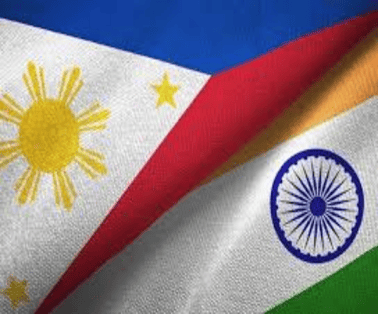
The geopolitical landscape of Asia is shifting rapidly, and right at the center of this transformation is the booming dynamic of India and Philippines relations. Long anchored by shared democratic values and common cultural traits, these two vibrant Asian nations have officially elevated their bilateral ties to a formal Strategic Partnership.
This milestone marks a massive leap forward in regional diplomacy, trade, and defense cooperation, signaling a unified front in a fast-evolving Indo-Pacific region.
2026 Context: Why India and Philippines Relations Matter Right Now
While the groundwork for this new era was laid during a historic 2025 presidential visit, India and Philippines relations have continued to accelerate rapidly into 2026.
Latest 2026 Developments:
- June 2026 Trade Surge: At the 14th Joint Working Group on Trade and Investment (JWGTI) meeting held in Manila, officials announced that bilateral trade reached a staggering USD 3.9 billion for the 2025–26 financial year. Both sides are now fast-tracking a Preferential Trade Agreement (PTA).
- March 2026 Maritime Alliance: The 2nd India-Philippines Maritime Dialogue convened in New Delhi, deepening joint naval coordinates, coast guard cooperation, and shared monitoring of the vital South China Sea lanes.
The Landmark Visit That Redefined India and Philippines Relations
The major turning point for modern India and Philippines relations took place when Philippine President Ferdinand R. Marcos Jr. paid a historic state visit to India. Coinciding with the 75th anniversary of formal diplomatic ties, this event completely reshaped the partnership.
- First of its Kind: This was the first official state visit by President Marcos to India since taking office.
- High-Level Delegation: Accompanied by First Lady Louise Araneta Marcos and key Cabinet ministers, the visit signaled immense political commitment from Manila.
- The 2025–2029 Plan of Action: Both nations formalized a comprehensive roadmap outlining joint initiatives in defense, counter-terrorism, climate action, and digital connectivity over the next five years.
Milestones Sealed in the Modern Strategic Partnership
The evolution of India and Philippines relations isn’t just political rhetoric; it is backed by major international treaties and legal frameworks designed to benefit citizens of both nations.
- Security and Legal Cooperation
To build a safer regional environment, the two countries signed a Mutual Legal Assistance Treaty (MLAT) alongside a Treaty on the Transfer of Sentenced Persons (allowing prisoners to serve out sentences in their home country). Additionally, counter-terrorism and cyber defense mechanisms were significantly strengthened.
- Tourism and Visa Facilitation
To bring people closer together, travel barriers have been cut down:
- For Indians: The Philippines now allows 14-day visa-free access for Indian tourists.
- For Filipinos: India introduced a one-year gratis (free) e-tourist visa system.
- Direct Flights: Active discussions are underway to establish direct flight routes between New Delhi and Manila.
- Economic, Digital, and Infrastructure Collaboration
India has shared its revolutionary Gatishakti platform for digital infrastructure planning with the Philippines. Cooperation has also moved to link national digital payment systems (similar to India’s UPI), enhance pharmaceutical distribution, and invite Indian firms to invest heavily in Philippine mass-transit and infrastructure projects.
Maritime and Defense Cooperation in the Indo-Pacific
A primary pillar of India and Philippines relations is maintaining a free, open, and rules-based Indo-Pacific. Because both nations face persistent territorial challenges, their defense integration has skyrocketed.
1.The 2022 BrahMos Breakthrough:Defense Milestone.
The Philippines became the very first Southeast Asian country to buy India’s advanced BrahMos supersonic cruise missile system in a historic deal.
2.First Joint South China Sea Drills:Naval Integration.
Both nations deployed warships to conduct their first-ever joint naval combat exercises directly inside the contested South China Sea.
3.The 2026 Maritime Dialogue:Active Security Integration.
New Delhi and Manila convened high-level Air Staff Talks and established structural sharing networks through India’s Information Fusion Centre (IFC-IOR).
Tracing the Journey: Decades of Growing Engagement
To truly understand the strength of India and Philippines relations, students must look back at the historical milestones that laid this solid foundation.
| Historical Year | Key Milestone in Bilateral Ties |
| 1949 | Official diplomatic relations established right after both countries gained independence. |
| 1952 | The foundational Treaty of Friendship is signed. |
| 1992 & 2014 | India’s Look East and Act East policies structurally link India with ASEAN member states. |
| 2026 | The Philippines steps up as the ASEAN Chair, placing it at the absolute steering wheel of India-ASEAN relations. |
Shared Deep Roots and Culture
Long before modern politics, civilizational ties existed. Tagalog contains various Sanskrit-derived words, and historical archaeological discoveries—like the ancient Laguna Copper Plate and the golden Agusan Tara figurine—prove that commercial and cultural exchanges between India and the Philippine archipelago have thrived for over a thousand years.
Strategic Convergence: Why This Partnership Benefits Asia
The economic and geographic realities of the 21st century make tight India and Philippines relations a absolute necessity:
- Protecting Global Trade Routes: Over 50% of India’s maritime trade passes directly through the South China Sea. Ensuring freedom of navigation under the United Nations Convention on the Law of the Sea (UNCLOS) keeps energy and goods flowing safely.
- Economic Synergy: While India acts as a pharmaceutical powerhouse (providing 12% of all Philippine medicine imports), the Philippines exports vital semiconductor components and electronic machinery right back to India’s booming tech sectors.
- Geopolitical Balancing: By acting as a reliable security provider, India supports Southeast Asian nations against assertive regional powers, helping maintain stability without relying solely on Western military alliances.
Fast Facts: The Philippines at a Glance
- Official Name: Republic of the Philippines
- Geography: An expansive archipelago of over 7,000 islands in Southeast Asia (Western Pacific Ocean).
- Population: ~113.2 Million
- Capital City: Manila
- Official Languages: Filipino (Tagalog) and English.
- Currency: Philippine Peso (PHP or ₱)
- Economic Identity: Driven heavily by a robust service industry, which accounts for over 62% of the country’s total GDP.
As the 2025–2029 Action Plan rolls out and cross-border trade pushes past the $3.9 billion mark, India and Philippines relations stand out as an essential case study of modern democratic cooperation in Asia.
Track Global Foreign Policy and Geopolitics
To monitor ongoing diplomatic shifts, bilateral defense treaties, and regional economic breakthroughs across the Indo-Pacific, visit NewsCanvassEdu.