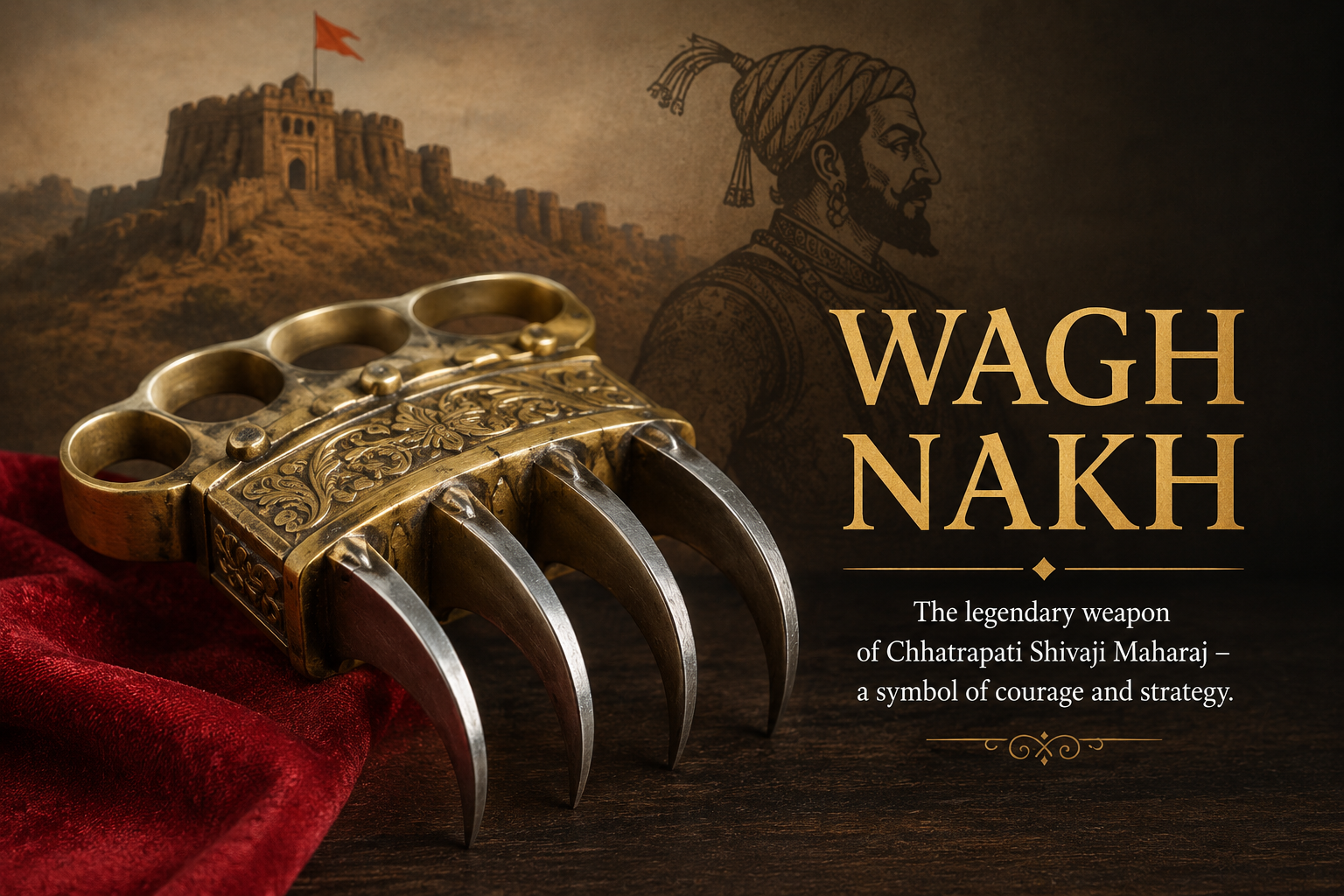
The iconic wagh nakh (tiger-claw dagger) associated with Chhatrapati Shivaji Maharaj has been repatriated from London to Maharashtra. On loan for three years from the Victoria & Albert Museum, it will be displayed across museums in the state, beginning with Chhatrapati Shivaji Sangrahalay, Satara, as part of the 350th coronation anniversary commemorations.
Repatriation at a Glance
- Where it is now: Chhatrapati Shivaji Sangrahalay, Satara (Western Maharashtra) for public display.
- Loan & tour plan: Brought from London’s Victoria and Albert Museum (V&A) on a three-year loan; to be showcased across multiple Maharashtra museums.
- Historic first: Returns to India for the first time since the East India Company carried it to England during colonial rule.
- Commemoration: Arrived on July 17, aligning with the 350th anniversary of Chhatrapati Shivaji Maharaj’s coronation.
What Is the Wagh Nakh?
- Meaning & design: Wagh nakh literally means “tiger claws.” It’s a medieval claw-like dagger used across the Indian subcontinent.
- Form factor: Typically four or five curved blades mounted on a bar or glove; worn over knuckles or concealed under the palm.
- Use-case: Ideal for personal defence or stealth, capable of slicing through skin and flesh with swift, close-quarters strikes.
Why the Wagh Nakh Matters in Maratha History
- Legendary episode—Pratapgad (1659): The most famous use is tied to Afzal Khan’s encounter with Chhatrapati Shivaji Maharaj.
- Context: Afzal Khan, a formidable Adil Shahi general, marched into the Konkan to quell the rising Maratha power.
- Shivaji’s foresight: Sensing treachery, Shivaji wore chainmail beneath his robes and concealed a wagh nakh.
- The clash: When Afzal Khan allegedly attacked during an embrace, Shivaji’s armour absorbed the blow; he counter-struck with the wagh nakh, mortally wounding Khan.
- Aftermath: Afzal Khan was beheaded by Shivaji’s aide; the Marathas triumphed in the ensuing battle—an inflection point in Maratha ascendancy.
Afzal Khan: The Adil Shahi Commander
- Profile: 17th-century general of Bijapur’s Adil Shahi dynasty; reputedly imposing in stature and renown.
- Campaign: Advanced with ~10,000 cavalry, plundering en route from Bijapur to Wai; sought a parley near Pratapgad.
- Council at Raigad/Pratapgad: While many advised peace, Shivaji prepared for duplicity.
- Outcome: The meeting turned violent, ending with Shivaji’s victory and a rout of Adil Shahi forces.
- Legacy site: Maratha sources state Afzal Khan’s remains were interred near the fort, with a tomb raised on Shivaji’s orders.
How Did Chhatrapati Shivaji Maharaj’s Wagh Nakh Reach London?
- Provenance claim: The V&A attributes the weapon’s arrival in Britain to James Grant Duff (1789–1858), East India Company officer and Resident of Satara (1818–22).
- Post-war context: After Baji Rao II (the last Peshwa) surrendered in June 1818, it’s possible the item was surrendered to Duff.
- Caveat: The V&A notes this is an unverified claim, based chiefly on Duff’s own inscription on the storage box.
Chhatrapati Shivaji Maharaj: Life & Leadership (Quick Timeline)
- Birth: 19 Feb 1630, Shivneri Fort, Pune district; son of Shahaji Bhonsle (Maratha general) and Jijabai (whose piety shaped his values).
- Early stewardship: Inherits the jagir of Poona (c.1637); assumes full charge after Dadaji Kondadev’s death (c.1647).
- First forts: By c.1645–47, captures Rajgarh, Kondana, Torna; builds Raigad after taking Torna (c.1646).
- Consolidation: c.1654–57—controls forts in Western Ghats/Konkan, defeats Adil Shahi incursions; raids Daman (Portuguese) and exacts tribute.
- Mughal pressure & riposte:
- c.1660–63: Shaista Khan seizes Poona; Shivaji’s night raid (1663) injures Khan and kills his son, forcing Khan’s recall.
- 1664: Sack of Surat shocks Mughal commerce.
- 1665: Treaty of Purandar after siege; Agra visit and daring escape with his son under disguise.
- Resurgence: 1667–70: Rebuilds forces; recaptures forts (1670); second sack of Surat; Battle of Salher (1672) victory.
- Coronation & southern thrust: Crowned 6 June 1674 at Raigad; later campaigns capture Vellore and Gingee (future Maratha capital for nine years).
- Demise & legacy: 3 April 1680, passes at Raigad (age 53). The Maratha state dominates western India for the next century-plus.
Key Battles & Campaigns
- Pratapgad (1659): Shivaji vs Afzal Khan (Adil Shahi) near Satara.
- Pavan Khind (1660): Baji Prabhu Deshpande vs Siddi Masud near Vishalgad.
- Sack of Surat (1664 & 1670): Strategic raids undermining Mughal finance.
- Purandar (1665): Mughal–Maratha conflict leading to a treaty.
- Sinhagad (1670): Tanaji Malusare vs Udaybhan Rathod—a storied Maratha feat.
- Sangamner (1679): Late Maratha–Mughal clash; Shivaji’s last battle.
- Kalyan (1682–83): Bahadur Khan (Mughal) defeats Marathas near Kalyan (post-Shivaji chronology relevance).
Titles & Statecraft
- Royal investiture: Chhatrapati Shivaji Maharaj crowned 6 June 1674 at Raigad.
- Honorifics: Chhatrapati, Shakakarta, Kshatriya Kulavantas, Haindava Dharmodhhaarak.
- Enduring impact: The Maratha polity he shaped became the pre-eminent Indian power in the early 18th century.
To Download Monthly Current Affairs PDF Click here
Click here to get a free demo
Discover all about CLAT Exam