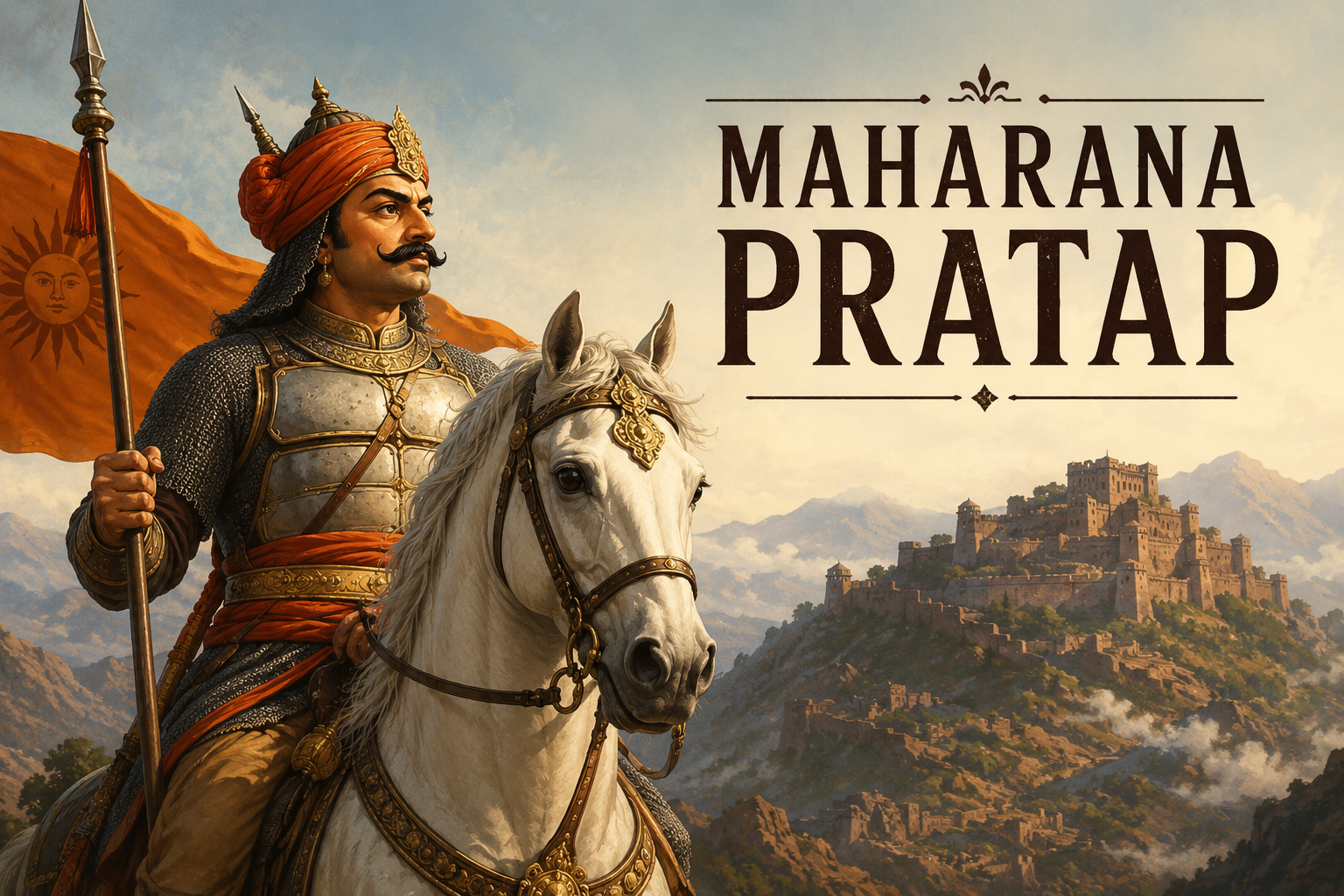
Maharana Pratap remains the ultimate symbol of Rajput valor, sacrifice, and unwavering patriotism. As India celebrates the 486th birth anniversary of this legendary ruler in 2026, his life story continues to inspire millions. Born on May 9, 1540, at the Kumbhalgarh Fort, Maharana Pratap Singh I of Mewar is most famously remembered for his fierce resistance against the expansionist Mughal Empire under Akbar, choosing a life of hardship in the Aravalli hills over the comfort of submission.
Maharana Pratap Jayanti 2026: Dates and Significance
While his historical birth date is May 9, the traditional Maharana Pratap Jayanti 2026 will be celebrated on Wednesday, June 17, 2026, according to the Hindu lunar calendar (Tritiya Tithi, Jyeshtha Shukla Paksha).
The 486th Jayanti is marked by:
- Grand Processions: Massive equestrian rallies in Udaipur and Chittorgarh.
- Tributes at Moti Magri: Floral offerings at the 11-foot bronze statue of Pratap and his faithful horse, Chetak.
- Educational Seminars: Nationwide discussions on his guerrilla warfare tactics and their relevance in modern military strategy.
The Battle of Haldighati: Maharana Pratap’s Masterclass in Bravery
The definitive moment in the life of Maharana Pratap was the Battle of Haldighati, fought on June 18, 1576. Faced with the massive Mughal army led by Raja Man Singh I, Pratap’s forces—including his Afghan contingent led by Hakim Khan Sur and local Bhil tribesmen—engaged in a conflict that would become legendary.
Key Tactical Highlights:
- Guerrilla Warfare: Pratap used the narrow, turmeric-colored passes of the Aravalli range to nullify the Mughal numerical advantage.
- Chetak’s Loyalty: During the peak of the battle, his horse Chetak leaped onto the head of an elephant to allow Pratap to strike at the Mughal commander. Despite being mortally wounded, Chetak carried his master to safety.
- Psychological Defiance: Although the battle was technically indecisive, Maharana Pratap never surrendered his sovereignty, successfully recapturing much of Mewar in the following years through the Battle of Dewair (1582).
Why Maharana Pratap Still Ranks as a Global Icon
The legacy of Maharana Pratap transcends borders and centuries. In 2026, he is studied not just as a king, but as a pioneer of asymmetric warfare.
- The Savior of Rajput Identity
Pratap’s refusal to marry into the Mughal court or accept a “Mansabdari” (rank) preserved the distinct cultural and political identity of the Rajputana states during a period of total imperial domination.
- A Champion of Inclusion
Long before modern concepts of social integration, Maharana Pratap treated the Bhil tribal community as his equal brothers-in-arms. Their expertise in the rugged terrain of the Aravallis was the backbone of his resistance.
- Influence on Future Warriors
The military strategies of Maharana Pratap directly influenced the Maratha King Chhatrapati Shivaji Maharaj and the Deccani General Malik Ambar in their own struggles for independence.
Visiting the Maharana Pratap Legacy in 2026
If you are planning a trip to witness the history of Maharana Pratap, ensure you visit these key locations:
- Kumbhalgarh Fort: His birthplace and a UNESCO World Heritage site with the second-longest wall in the world.
- Pratap Smarak, Udaipur: Located on Moti Magri, offering a panoramic view of Lake Fateh Sagar.
- Haldighati Museum: A state-of-the-art museum in Rajsamand that features a light-and-sound show depicting the 1576 battle.
| Location | Importance | Best Time to Visit |
| Kumbhalgarh | Birthplace & Fortifications | Oct – March |
| Haldighati | Battlefield & Museum | All year round |
| Chittorgarh | ancestral seat of power | Oct – March |
Conclusion: The Living History of Maharana Pratap
The story of Maharana Pratap is not a closed chapter in a history book; it is a living inspiration for self-respect and perseverance. As the sun sets over the Aravalli hills on his 486th Jayanti, the echoes of his vow to never sleep on a bed or eat from gold plates until Mewar was free still resonate through the soil of Rajasthan.
Maharana Pratap’s spear weighed approximately 80 kg, and his total armor weight (including two swords and a shield) exceeded 200 kg—a testament to his legendary physical strength.
Also Read
- Policy Update: New Labour Codes 2026: Impacts on Modern Employment
- Space Science: Aditya L1 Mission 2026: Latest Discoveries from the Sun
- Academic Success: BSEB 10th Result 2026 – Direct Link & Updates